
A journey to discover Tuong Binh Hiep lacquer village, Vietnam’s Intangible Cultural Heritage of Vietnam.
If you love traditional handicrafts, the lacquer village of Tuong Binh Hiep is a place you should not miss. This village, about 30 km north of Ho Chi Minh City, sits in Thu Dau Mot, roughly an hour’s drive away, and is in the heart of old Binh Duong, now part of HCMC. The village lies between the Saigon, Be, and Dong Nai rivers, a position that long connected it to the southern seaports; its vast forests once supplied some of the finest timber in the country. 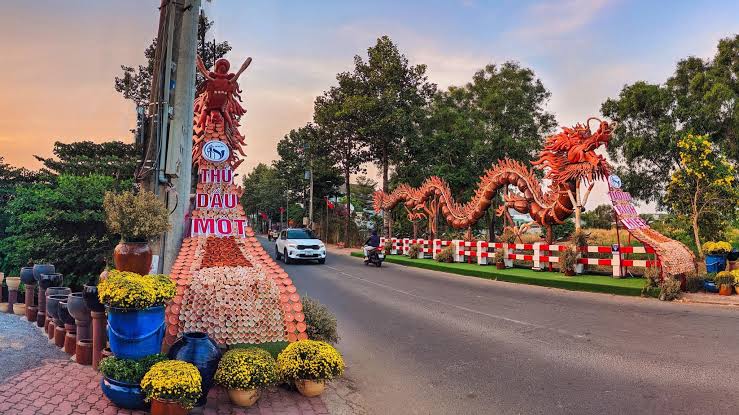
Historians can trace lacquerware in this region back nearly 300 years. After 1698, when Nguyễn Hữu Cảnh organized the settlement of the southern lands, large numbers of Vietnamese migrants arrived from the Red River Delta, Thanh Haa, Nghe An, Ha Tinh, Quang Binh, Thuan Haa, and Quang Nam. They brought with them a craft they already knew well, and in their new home they adapted it to the materials available around them
Fertile farmland allowed some villagers to leave farming and specialize in crafts. As the new communities grew, they built communal houses, pagodas, and temples that required lacquer for decoration and ritual objects. Traces of this early work can still be found at places such as Bà Lụa Temple in Thu Dau Mot, Hoi Khanh and Chau Thoi Pagodas, and many communal houses throughout the Dong Nai and Gia Dinh region.
A new chapter opened in 1901, when the French established the Thu Dau Mot School of Arts and Crafts, today known as Binh Duong College of Arts. The school trained successive generations of artisans, painters, sculptors, and teachers. Graduates from other art schools later joined them, including those from Gia Dinh (1913), Bien Hoa (1905), and the Indochina School of Fine Arts in Hanoi (1925), bringing fresh ideas that enriched the local lacquer tradition.
In Tương Bình Hiệp itself, local memory recalls that lacquerware became part of everyday life around the 1930s. The village’s golden age stretched from roughly 1945 to 1975 and then again through the 1980s and 1990s, when a cooperative of more than 160 members sustained hundreds of households and drew workers from other regions eager to learn the craft. In 2016, the tradition was officially recognized as National Intangible Cultural Heritage, and the Tân An communal house, where the village gathers each year to honor its patron ancestors, stands as a national historic monument.
Behind this living heritage stand families who have kept the craft alive for generations. Among them is Master Artisan Le Ba Linh, known as Tu Bon, a third-generation lacquer maker who also helps lead the provincial lacquer association. Master Truong Quang Tinh of the Dinh Hoa workshop has turned part of his studio into a small private museum of lacquer objects. The historic Thanh Le workshop was founded by Truong Van Thanh and Nguyen Van Le. What makes Tuong Binh Hiep distinctive is that it continues all three traditional branches of lacquer work in one place: decorative lacquer for temples and architecture, applied lacquer for furniture and everyday objects, and fine-art lacquer painting.
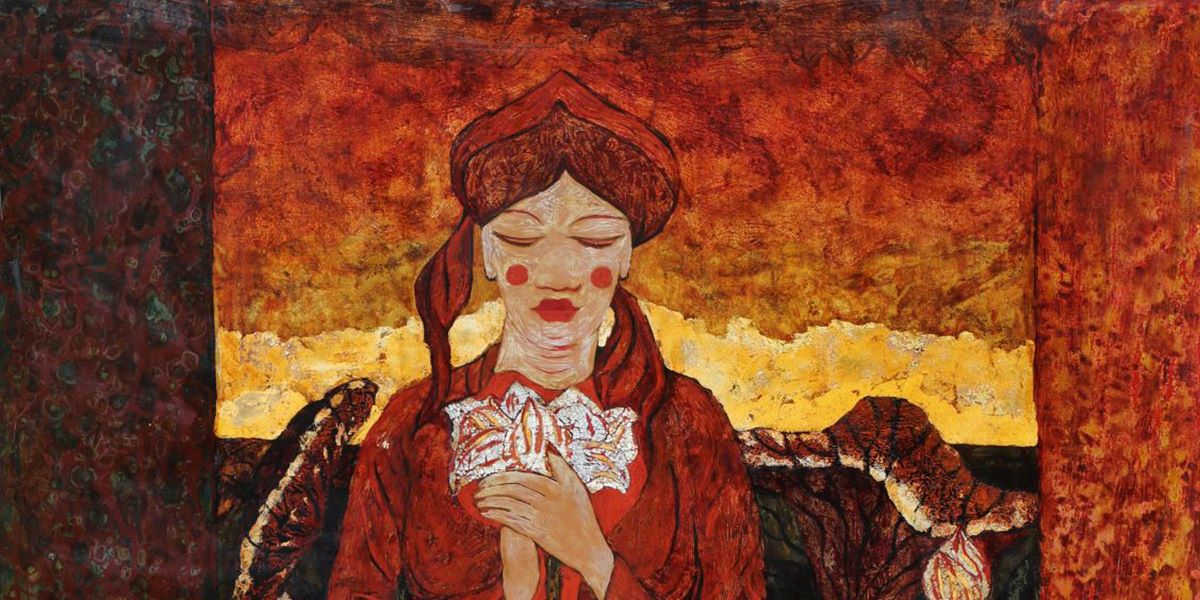
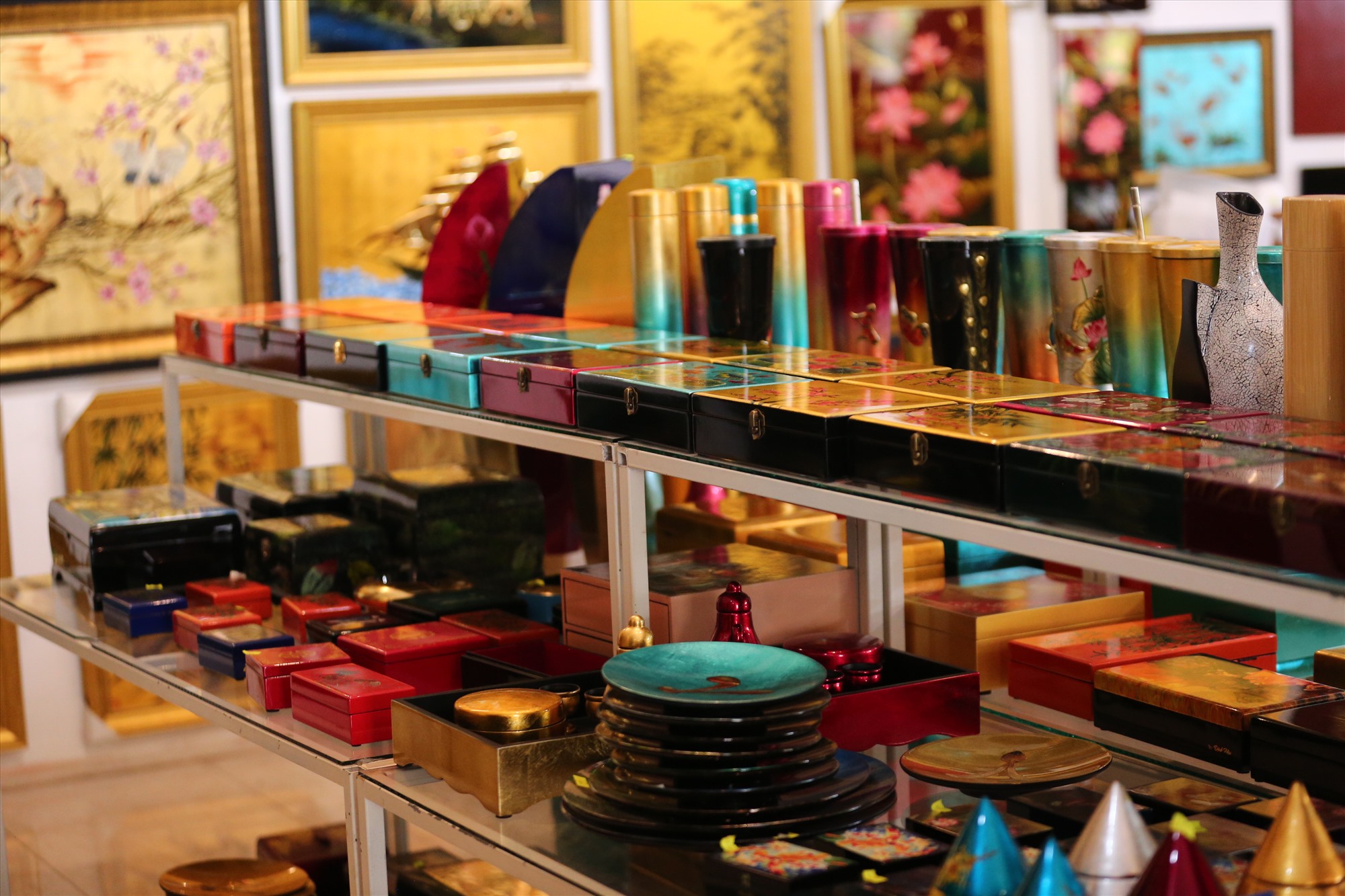 Because many of the artisans were farmers before they became painters, their work is deeply rooted in the life they knew. Their pieces often depict the four seasons through plum blossoms, orchids, chrysanthemums, and bamboo; ducks swimming among lotus flowers; butterflies among blooms; pines and cranes; and the four sacred animals, as well as everyday scenes of fishing, woodcutting, plowing, harvesting, herding buffalo, and boys playing flutes in the fields. Others depict beloved landmarks such as Hoàn Kiếm Lake, Hạ Long Bay, the Perfume River in Hue, and the Temple of Literature or pay tribute to historical figures such as the Trung Sisters.
Visitors can also learn the main techniques.
In “sơn lộng”, one of the oldest methods, an artisan covers wood with black lacquer, carves out the design with a knife, fills the hollows with color, and polishes the surface flat.
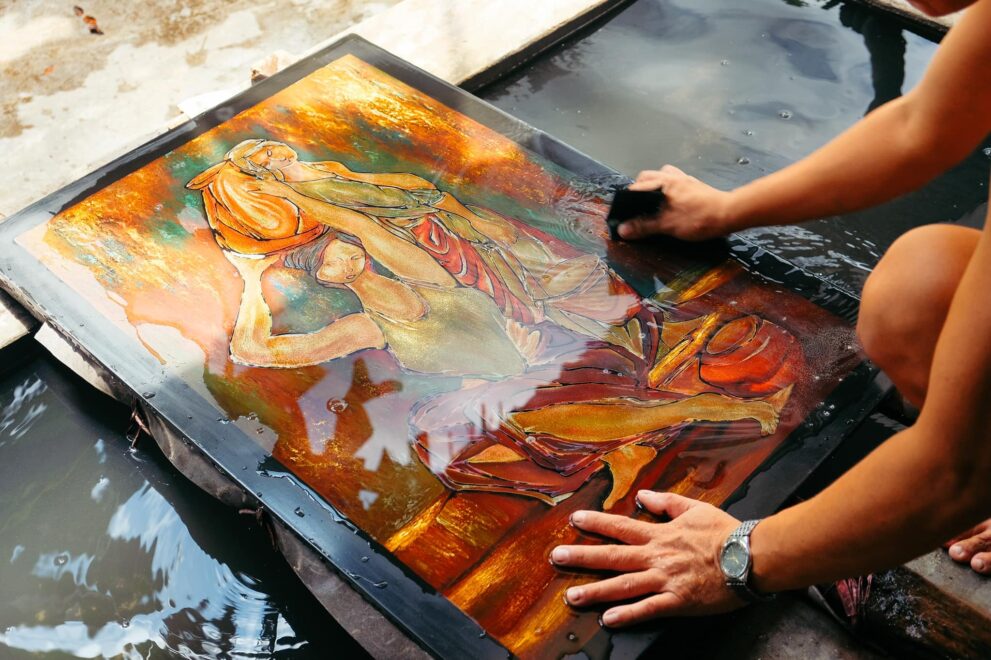
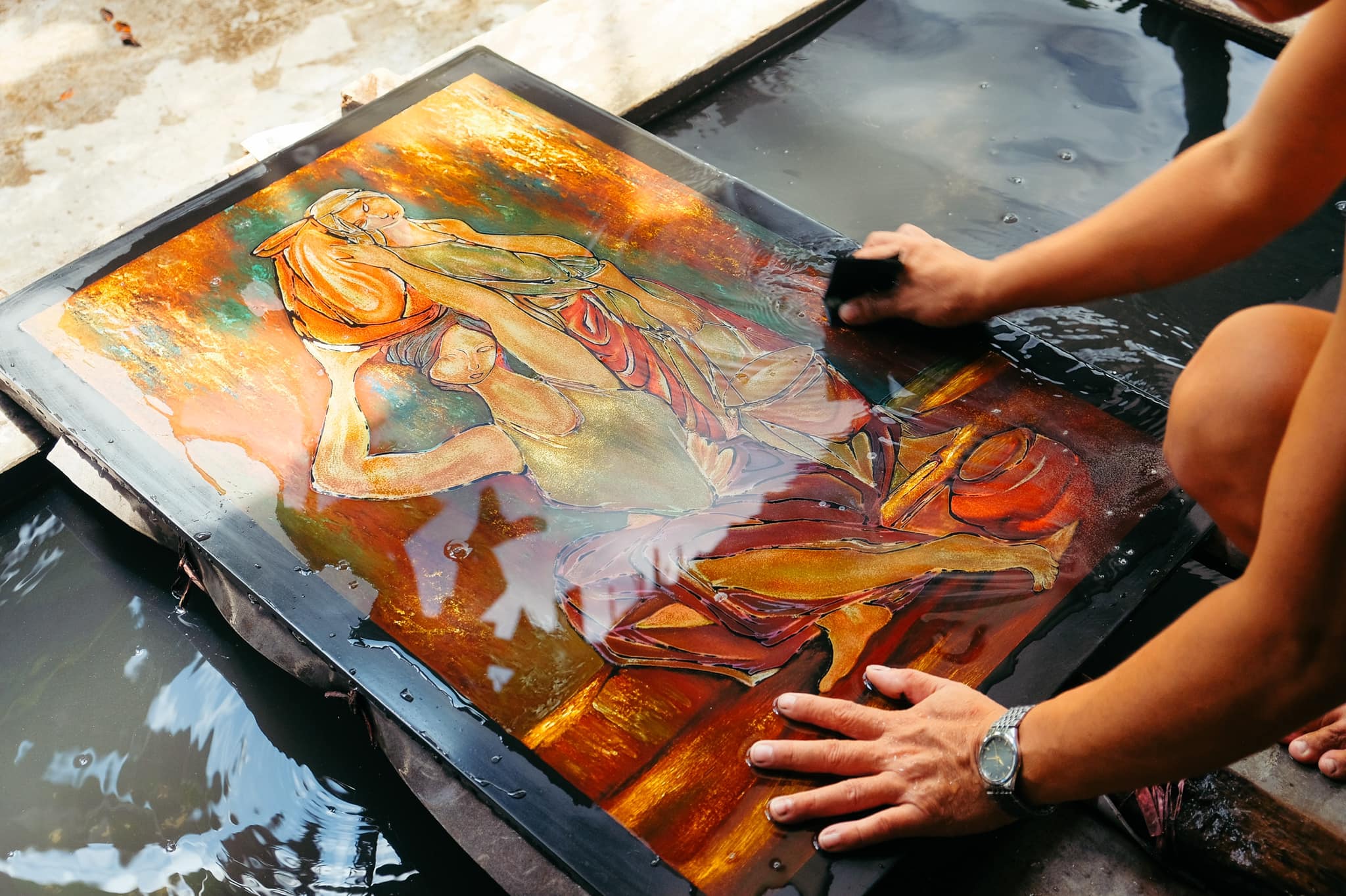
In “vẽ chìm”, the design is drawn on a flat board, coated, colored, and polished to a deep shine, while in vẽ mòng, thin layers of color are applied through a chalk-drawn pattern, which is then washed away to reveal the image.
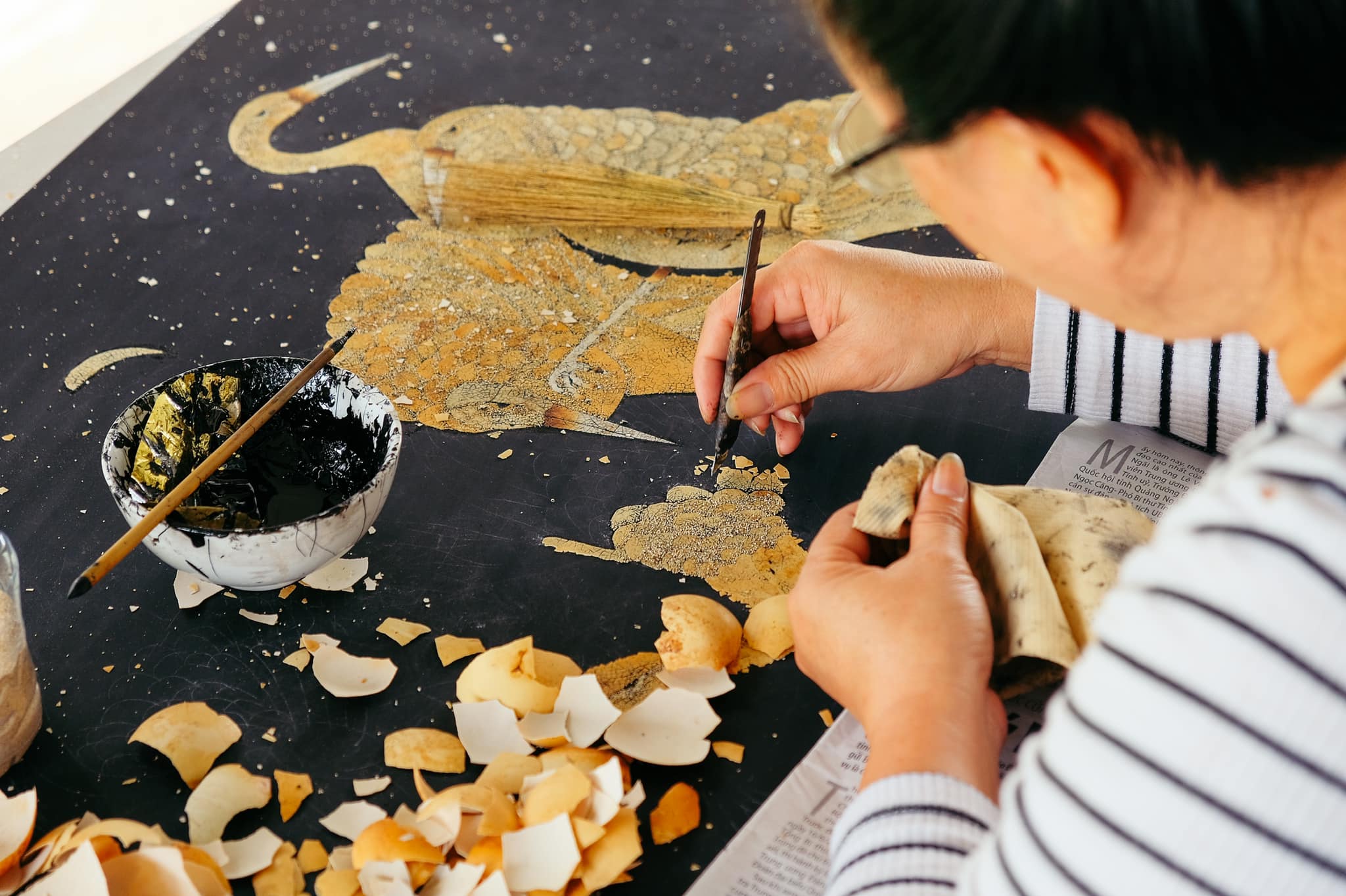
“Khoét trũng” carves a recess one to two millimeters deep for color, “đắp nổi” builds raised relief with gypsum, and cẩn inlays mother-of-pearl or eggshell, sometimes in forms that require at least twenty coats of lacquer so the surface sits level with the inlay.
A fine painting may pass through as many as twenty-five stages, from sanding the wood and filling its pores to applying many coats of base lacquer, drawing, coloring, and a final polish.
Modern artisans have also adapted, blending traditional Vietnamese lacquer with the faster-drying, more affordable “Nam Vang” lacquer. This allows them to produce larger pieces more efficiently while still preserving the quality that people love.
On a visit, you can walk through the workshops and watch artisans sand and polish pieces under water, browse showrooms and small museum corners that display both historic and contemporary works, and even sit down with a master to decorate a small piece of your own.
Yet the village faces a quiet challenge: fewer families practice the craft today than in its busiest decades, and many of the masters are growing older.
Come discover this living heritage for yourself. Book a tour to Tuong Binh Hiep and experience the art of Vietnamese lacquer firsthand.
Book Tour
Tell us more about your trip preferences!We organize tours and car transfer services around Vietnam. This form helps us to understand your wants and needs, so we can create a personalized travel itinerary that suits your traveling style.